Los Algodones earns an overall trustworthiness score of 7.0 out of 10. That is not an official rating. It is an editorial planning score based on reported crime statistics, government travel advisories, clinic audits, and patient feedback—and it splits sharply depending on what you are going there to do.
In a specialized medical-tourism economy squeezed into four walkable blocks, physical safety can be high while consumer and medical trust still depend on choosing the right clinic and asking the right questions. Treat the number as a starting point for due diligence, not a guarantee.
The Trust Score at a Glance
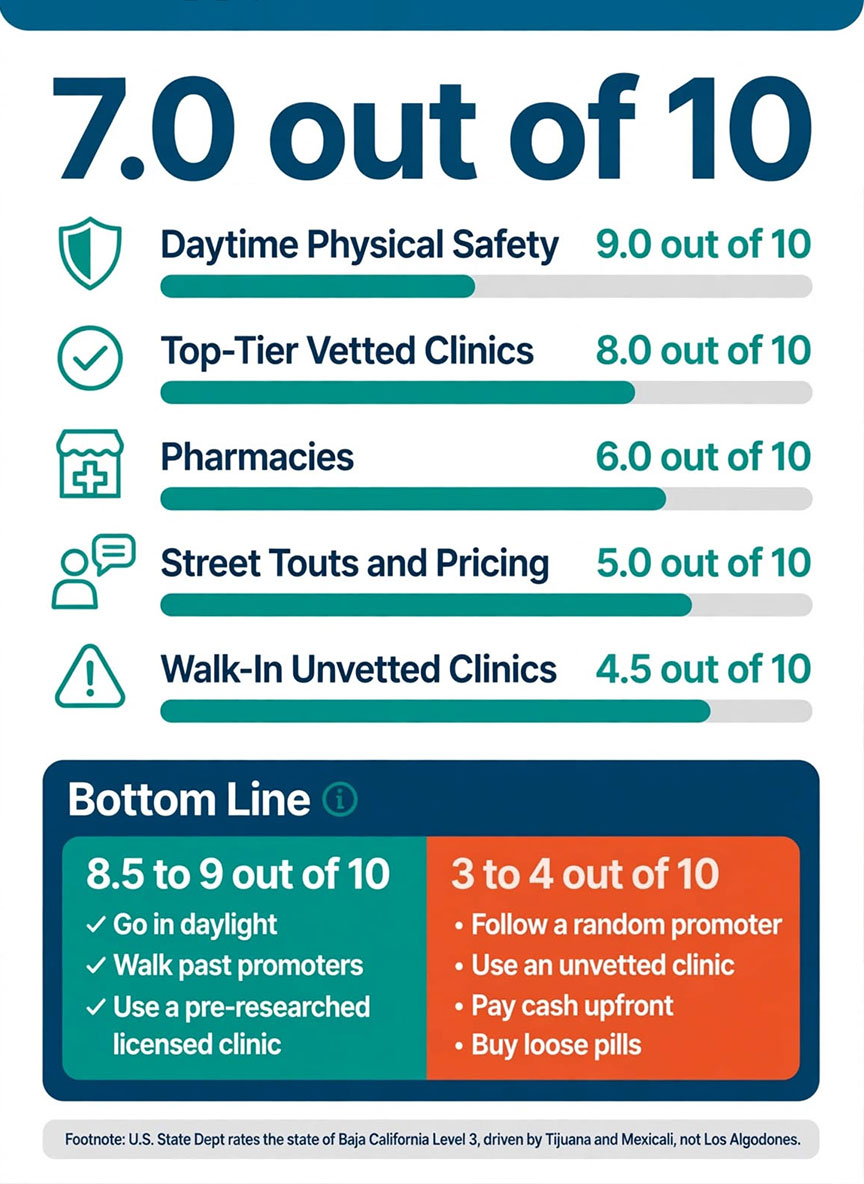
Each category is scored from 0 to 10, where 10 represents the strongest trust. The spread between categories is more useful than the overall average.
- Daytime physical safety · 9.0 / 10: Reported crime has been put at roughly two incidents per 1,000 residents—below the Mexican national average—with heavy daytime patrols and private security in the four-block tourist zone. Violent crime against visitors is rare. The broader state of Baja California remains at Level 3, “Reconsider Travel,” on the U.S. State Department’s advisory because of cartel violence in Tijuana and Mexicali; that advisory applies to the state as a whole, not specifically to Los Algodones.
- Top-tier vetted dental clinics · 8.0 / 10: Established, accredited clinics use materials from globally recognized manufacturers such as Straumann and Nobel Biocare, hold COFEPRIS clinic permits, verify dentists’ Cédula Profesional, and provide written warranties of two to five years.
- Walk-in or unvetted clinics · 4.5 / 10: With more than 300 clinics competing in a tiny area, quality varies widely. Patient complaints include aggressive upselling, rushed treatment plans, language barriers, and little practical legal recourse if a procedure fails.
- Pharmacies · 6.0 / 10: Routine maintenance medicines—insulin, inhalers, blood-pressure drugs—from major, established pharmacies are widely trusted by winter visitors. The risk rises sharply with controlled painkillers and stimulants: researcher testing and U.S. government warnings have found counterfeit pills containing fentanyl or methamphetamine at border pharmacies.
- Street touts and pricing transparency · 5.0 / 10: Commission-based “steerers” approach pedestrians near the border gate and guide them toward particular clinics or shops. Some tourist prices have crept toward U.S. levels, and smaller storefronts do not always post clear prices.
The Bottom Line: An 8.5–9 Trip or a 3–4 Trip
The same town can deliver a high-trust experience or a costly one. The difference is rarely luck; it is preparation and where you spend your money.
- High-trust trip · 8.5–9 / 10: You visit during daylight, walk past street promoters, go straight to a pre-researched, licensed clinic with verified credentials, and use mainstream pharmacies for standard, sealed medicines.
- Low-trust trip · 3–4 / 10: You follow a random street promoter into an unvetted clinic for major implant surgery, pay cash upfront without a written warranty, or buy loose or unverified controlled pills over the counter.
Before You Book: Avoid Dental Scams and Botched Work
Almost every bad dental experience starts with improvisation. These four rules matter more than the price on a flyer.
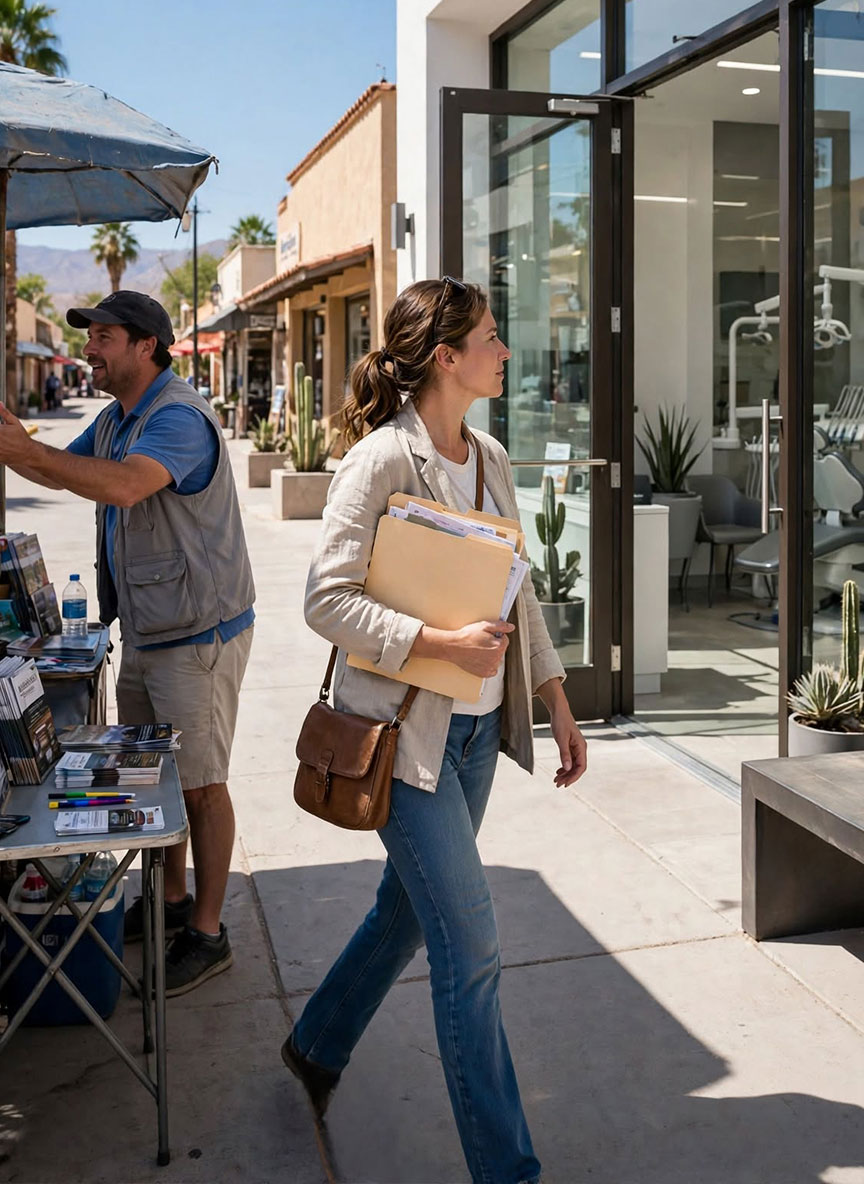
- Never follow a street promoter: People holding flyers or clipboards will offer to walk you to “the best dentist.” They work on commission—a cost that can be added to your bill—and reputable clinics rarely rely on street touts. Walk straight past them to your pre-booked clinic.
- Verify licenses before you book: Ask for the treating dentist’s full name and Cédula Profesional (the Mexican federal professional license number), plus the clinic’s COFEPRIS health operating permit. Legitimate clinics share these readily so you can check Mexico’s national registry.
- Get a written plan and warranty first: Send X-rays ahead of time and request an itemized quote before crossing. Confirm the exact brand of implants or materials—look for globally recognized names such as Straumann, Nobel Biocare, or Zimmer—and get a written warranty covering repairs or replacements.
- Do not pay 100% upfront in cash: Pay stage by stage as work is completed. A credit card creates a paper trail and may offer dispute protection, though you should ask whether the clinic adds a processing fee.
At the Pharmacy: Avoid Counterfeit and Mislabeled Medicine
Medication is the part of the trip where a casual purchase can become a serious safety risk. The pharmacy counter is not the place to bargain-hunt for controlled drugs.
- Never buy controlled medicines without a prescription: Avoid over-the-counter opioid painkillers such as Oxycodone or Percocet, benzodiazepines such as Xanax, and stimulants such as Adderall. Testing by researchers and warnings from the U.S. State Department have shown that counterfeit pills sold to tourists at border pharmacies can contain lethal doses of fentanyl or methamphetamine.
- Inspect packaging and seals: Stick to large, established pharmacy chains rather than tiny back-street stalls. Check for intact factory tamper seals, clear expiration dates, and manufacturer holograms. Never buy loose pills in baggies.
- Know U.S. customs rules: Bring a valid U.S. prescription for any medicine you plan to take back, keep drugs in their original packaging, and declare them at the Andrade Port of Entry. A 90-day personal supply is often cited as a limit, but CBP rules can change—confirm the current allowance before you return.
On the Ground: Physical Safety and Money
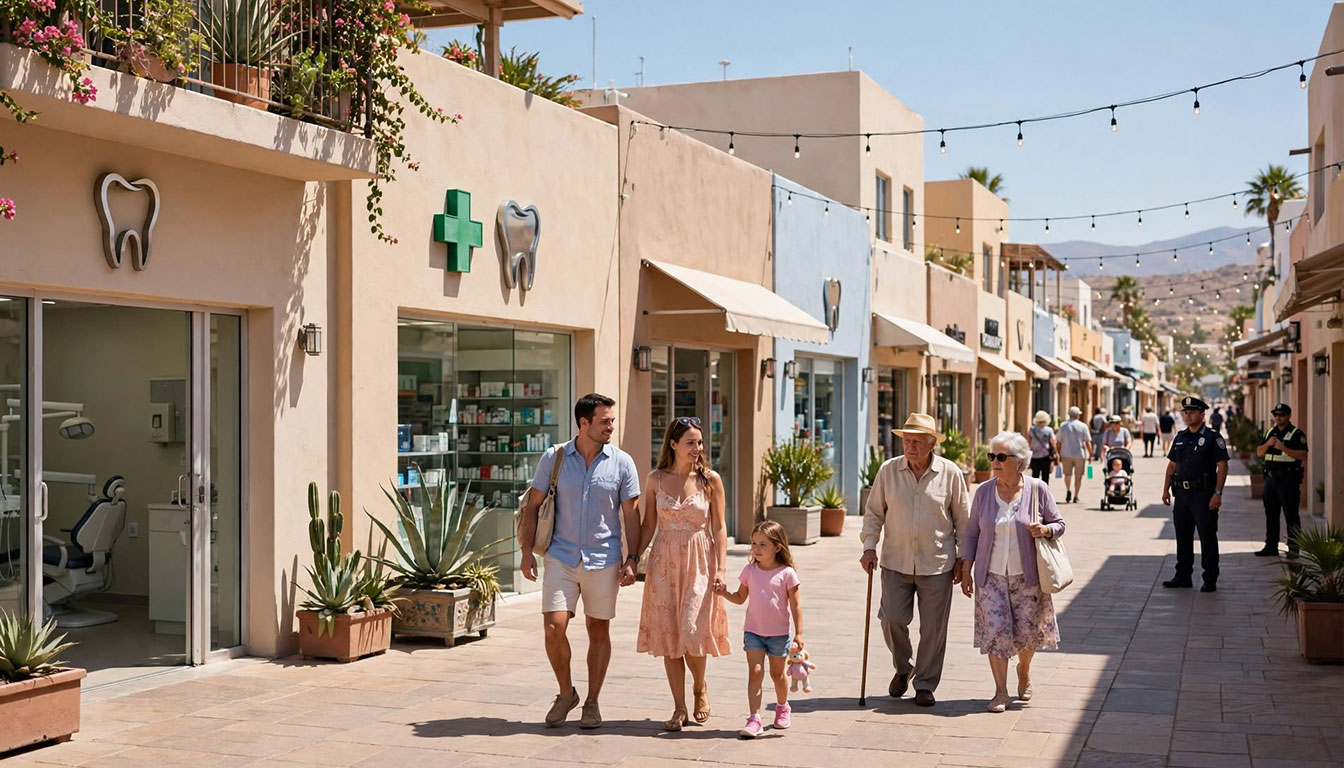
The four-block core is busy and heavily patrolled by day. Risk rises when visitors leave the tourist routine—especially after dark.
- Stick to daylight hours: Cross in the morning and return to the U.S. before dark. The tourist zone is heavily patrolled during the day, while wandering into unlit outer neighborhoods at night dramatically increases your risk.
- Park on the U.S. side and walk across: Use the secure Quechan Tribe parking lot at the Andrade crossing on the California side, just across from Yuma, and walk through the pedestrian turnstile. Driving into town adds confusing traffic and tight parking without much upside.
- Carry small bills and check every receipt: Bring $1s, $5s, $10s, and $20s for tips, street food, and optical shops so you do not flash a large wad of cash or get short-changed. Verify itemized restaurant and shop receipts before paying.
- Bring a valid passport or passport card: Mexican border agents may wave American pedestrians through quickly, but U.S. Customs requires a valid passport, passport card, or SENTRI/Global Entry card to re-enter without lengthy secondary delays.
A Five-Minute Pre-Crossing Checklist
Run through this list before you join the pedestrian line. A few minutes of verification is cheaper than correcting a bad crown or a confiscated medication later.
- The clinic: Dentist’s full name, Cédula Profesional, COFEPRIS permit, itemized treatment plan, material brands, and written warranty.
- The payment: Stage payments, card where practical, and no full cash payment before work is complete.
- The medication: Valid U.S. prescription, sealed original packaging, and a check of current CBP import limits.
- The documents: Passport book, passport card, or trusted-traveler card—plus prescriptions for any medication you carry.
- The timing: Morning crossing, U.S.-side parking, daylight return, and enough time for the border line.
What a 7.0 Really Means
A 7.0 is neither a warning nor a clean bill of health. It means Los Algodones can be a high-value, low-risk trip for a prepared patient—and an expensive lesson for an impulsive one. The town rewards people who verify credentials, insist on written terms, and refuse to let a stranger at the gate choose their dentist.
This chapter is general information, not medical or legal advice. Confirm current travel advisories and customs rules before you cross.